
Learn when sunburn during a Tel Aviv trip may call for medical guidance, and how English-speaking private care can help you decide what to do next. This article explains how clinic, home, hotel, or online consultations can support tourists with clear triage and coordinated follow-up.
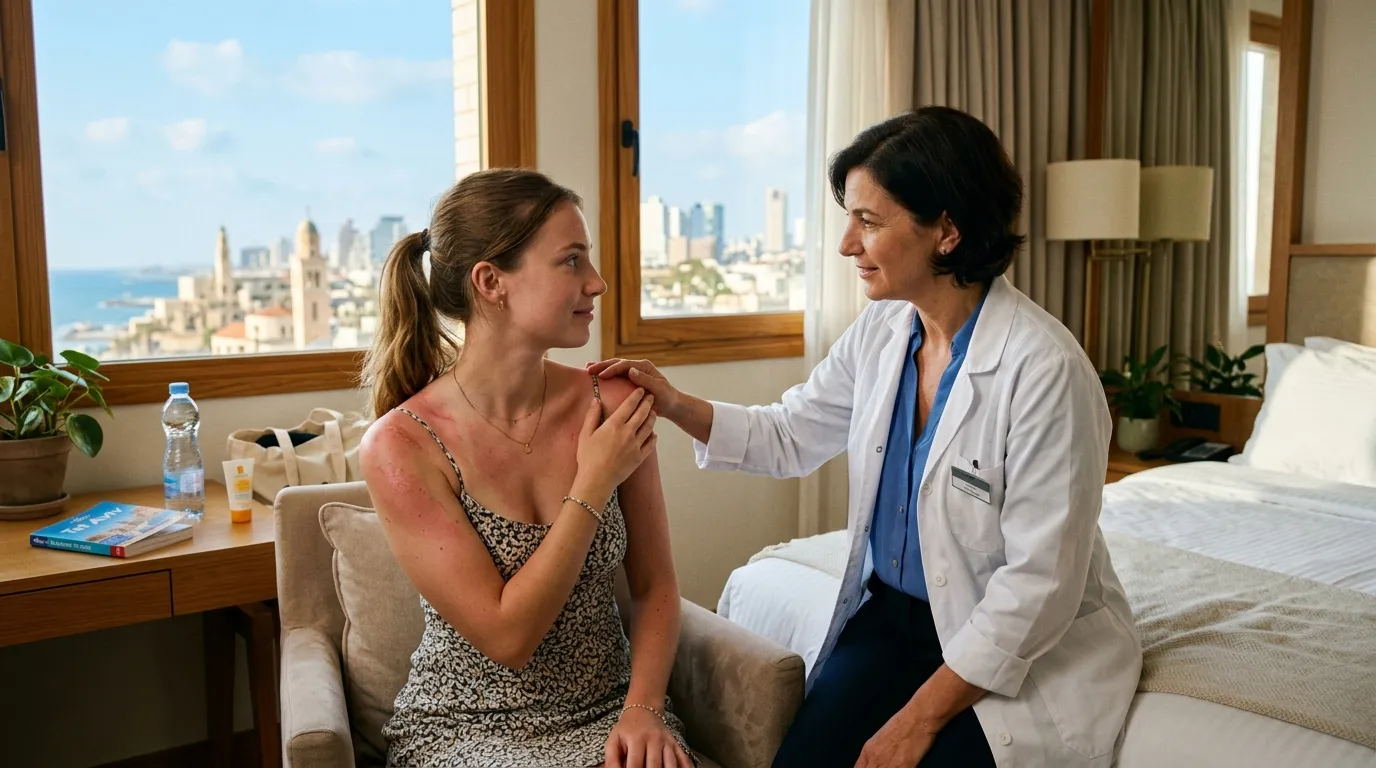
Tel Aviv’s beach weather can be one of the best parts of visiting Israel, but the sun can be stronger than many tourists expect. A mild sunburn usually improves with simple care, but more serious burns can cause blistering, dehydration, infection, and heat-related illness.
If you are traveling and do not know the local healthcare system, it can be hard to decide whether to wait, visit a pharmacy, or call a doctor. The guide below explains what you can safely do at home and when a medical visit makes sense.
Mild sunburn usually appears within a few hours after sun exposure and may feel worse later in the day or overnight. Common symptoms include:
Most mild sunburns improve within 3 to 5 days with cooling, hydration, and sun avoidance.
If your sunburn is mild and you feel otherwise well, start with basic care as soon as possible:
Do not apply ice directly to burned skin. Do not use butter, oils, alcohol-based products, or strong exfoliants. If blisters develop, do not pop them, because open blisters can become infected.
You should consider same-day medical care if the burn is more than a small, uncomfortable patch. A doctor visit is especially sensible if you have any of the following:
If symptoms are severe or you feel faint, confused, or very unwell, seek urgent medical care rather than waiting for the burn to improve.
In Tel Aviv, sunburn often happens alongside heat exposure, especially after a long beach day, outdoor tour, run, or walk along the promenade. Heat exhaustion can cause headache, nausea, heavy sweating, weakness, dizziness, and muscle cramps.
Move to a cool place, drink fluids, and rest. If symptoms do not improve quickly, or if there is confusion, fainting, very high body temperature, or inability to keep fluids down, urgent medical assessment is needed.
A doctor can check the depth and extent of the burn, assess hydration, look for infection, and review medications or medical conditions that may affect healing. Depending on the situation, care may include:
This can be especially helpful if you are in Israel for a short trip and need clear instructions in English.
For mild sunburn, a Tel Aviv pharmacy can often help with moisturizers, aloe vera products, oral rehydration salts, and over-the-counter pain relief. Pharmacists may also advise you to see a doctor if they notice blistering, infection concerns, or symptoms that suggest heat illness.
If you are unsure, medical triage can save time. You can describe the burn, your symptoms, your age, and any medicines you take, and a clinician can help decide whether a clinic visit, hotel visit, or online consultation is appropriate.
Many tourists use private medical services while in Israel and then submit documents to their travel insurance provider. If you plan to make a claim, ask for an invoice and medical summary. You can also read more about using travel insurance for private medical care in Israel.
After a sunburn, your skin is more sensitive. Protect it carefully for the rest of your visit:
If you are a tourist in Tel Aviv and your sunburn is painful, blistering, worsening, or linked with fever, dizziness, or dehydration, you do not need to handle it alone. Advah Medical can help arrange English-speaking medical care with clear triage, transparent pricing, and follow-up guidance.
Depending on your symptoms and location, care may be available in clinic, at your hotel or accommodation, or online. The goal is simple: to assess your condition, treat what needs treatment, and help you continue your trip safely.