
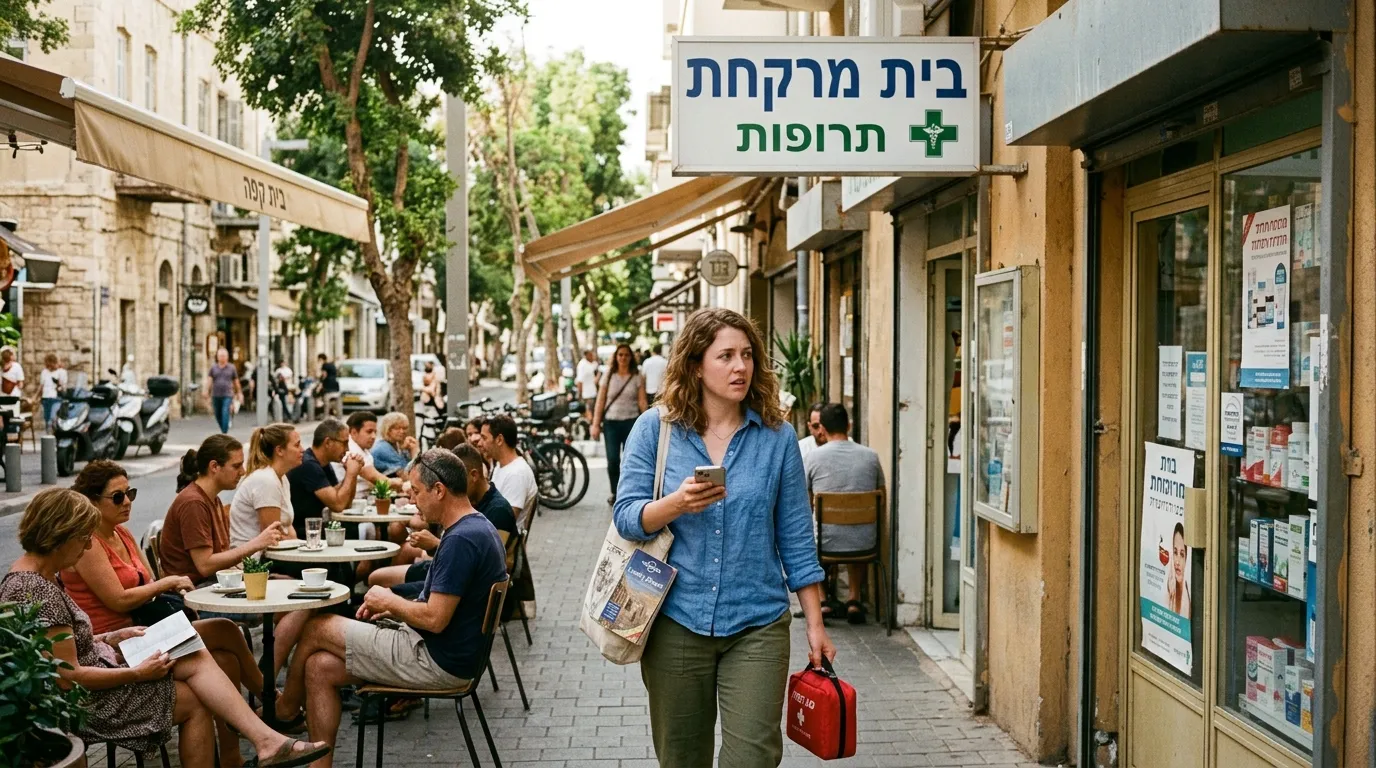
Getting sick while traveling can be stressful, especially when you do not know whether to walk into a pharmacy, book a doctor, or go straight to urgent care. In Israel, pharmacies are easy to find and can help with many mild symptoms, but they cannot diagnose every condition or prescribe most medications. Knowing where to start can save you time, money, and worry.
This guide explains when a pharmacy may be enough, when you should speak with a doctor, and when symptoms need urgent medical attention. It is written for tourists in Israel, including travelers staying in Tel Aviv, Jerusalem, Herzliya, Eilat, and other major destinations.
A pharmacy can be a good first stop when your symptoms are mild, familiar, and not getting worse. Pharmacists in Israel are trained professionals, and many speak English, especially in central areas and tourist zones.
You may be able to start with a pharmacy for symptoms such as:
Pharmacies can usually provide over-the-counter medicines, basic wound care items, oral rehydration salts, sunscreen, antihistamines, throat lozenges, pain relievers, and advice on how to use them safely.
To get safe advice, give the pharmacist clear information. Do not assume that a medicine sold without a prescription is safe for every person.
Tell the pharmacist:
If you are buying medicine for a child, give the child’s weight if you know it. Many children’s medicines are dosed by weight, not only by age.
You should speak with a doctor when symptoms are stronger, unclear, persistent, or affecting your ability to travel safely. A doctor can examine you, decide whether testing is needed, prescribe medication when appropriate, and arrange follow-up if your condition changes.
Consider booking a doctor if you have:
If you are not sure whether your symptoms need a doctor, a short clinical triage call can help you decide. For many travelers, the safest path is to speak with a doctor early rather than waiting until symptoms interrupt the rest of the trip.
Some symptoms should not be managed through a pharmacy or a routine appointment. Seek urgent medical care right away if you have any of the following:
In Israel, emergency ambulance service can be reached by calling 101. If you believe there is an immediate danger, do not wait for a pharmacy or private appointment.
Many medications require a prescription in Israel, including antibiotics, most steroid creams, stronger pain medicines, many inhalers, and several medicines for infections. A pharmacist may not be able to give you a medication that you can buy more easily in your home country.
If you normally take prescription medication, bring enough for your trip and keep it in its original packaging. If possible, carry a copy of your prescription or a doctor’s letter with the generic name of the medicine. Brand names can differ between countries, but generic names help local clinicians identify the right medication.
Mild stomach upset can often be managed with fluids, rest, and oral rehydration salts from a pharmacy. You should speak with a doctor if you have fever, blood in the stool, severe abdominal pain, repeated vomiting, or diarrhea that continues beyond 24 hours.
A pharmacy can help with lozenges, pain relief, and symptom care. A doctor may be needed if you have high fever, pus on the tonsils, swollen neck glands, a rash, or severe pain. Some throat infections need testing and prescription treatment.
For mild sunburn, a pharmacist may suggest soothing lotion, pain relief, and hydration. You should seek medical help if you have blistering over a large area, fever, chills, dizziness, confusion, vomiting, or signs of dehydration.
Small itchy bites can often be treated with pharmacy products. A doctor should check any bite or rash that spreads quickly, becomes painful, feels hot, produces pus, or comes with fever. Travelers should also get medical advice after an animal bite or scratch.
Private care can be useful when you need English-speaking medical advice, same-day access, or help deciding what level of care is appropriate. Depending on your symptoms, a doctor may be able to see you in a clinic, visit your hotel or apartment, or speak with you online.
If you have travel insurance, check your policy documents and keep receipts for consultations, medications, and tests. You can also read more about using travel insurance for private medical care in Israel before you book care.
Use this simple approach if you are unsure where to go:
If you are traveling with children, older relatives, or someone with chronic illness, it is better to ask for medical advice earlier. A condition that seems minor at first can become harder to manage when you are far from your usual doctor.
A small health kit can help you manage simple symptoms while you decide whether you need care. Consider keeping:
If you are unsure about a medication, ask a pharmacist or doctor before taking it, especially if you take other medicines or have a medical condition.
Many tourists can manage mild symptoms with pharmacy guidance, but you should not feel alone if you need more support. English-speaking private doctors in Israel can assess your symptoms, explain your options, prescribe treatment when needed, and coordinate follow-up care.
If your symptoms are worrying you, worsening, or disrupting your trip, a doctor can help you make a clear plan. Early advice often prevents unnecessary stress and helps you continue your visit with more confidence.